Every comment on your post is a person raising their hand. Most brands answer with a heart emoji and move on — and leave sales sitting on the table. Here's the six-step framework we use to turn public engagement into private conversations, and private conversations into customers, without being pushy.
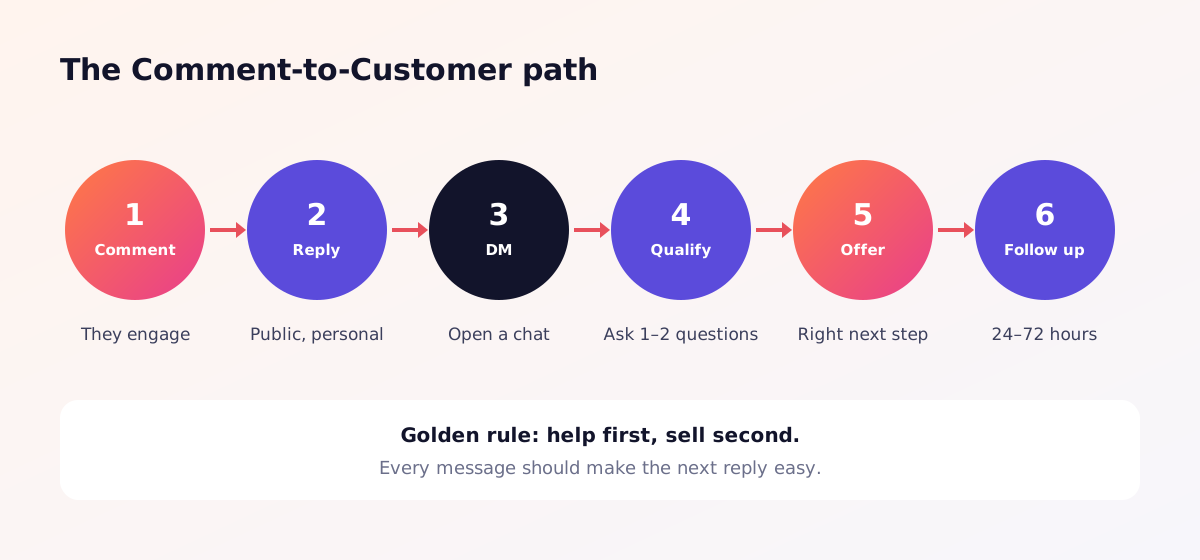
Step 1: Make commenting easy
You can't convert comments you never get. End posts with a clear, low-effort prompt: “Comment ‘GUIDE’ and I'll send you the checklist,” or “Which one would you pick — A or B?” Keyword prompts are especially useful because they tell you exactly who wants what.
Step 2: Reply publicly — and personally
Reply to every comment, ideally within the first hour after posting, when engagement matters most for reach. Make replies specific: use their name, reference what they said, and ask a follow-up question where it feels natural. A reply that invites another reply doubles the conversation on your post.
Weak: “Thanks! 🙏”
Strong: “Thanks, Maria! Are you doing this for your own studio or for clients?”
Step 3: Move to DMs
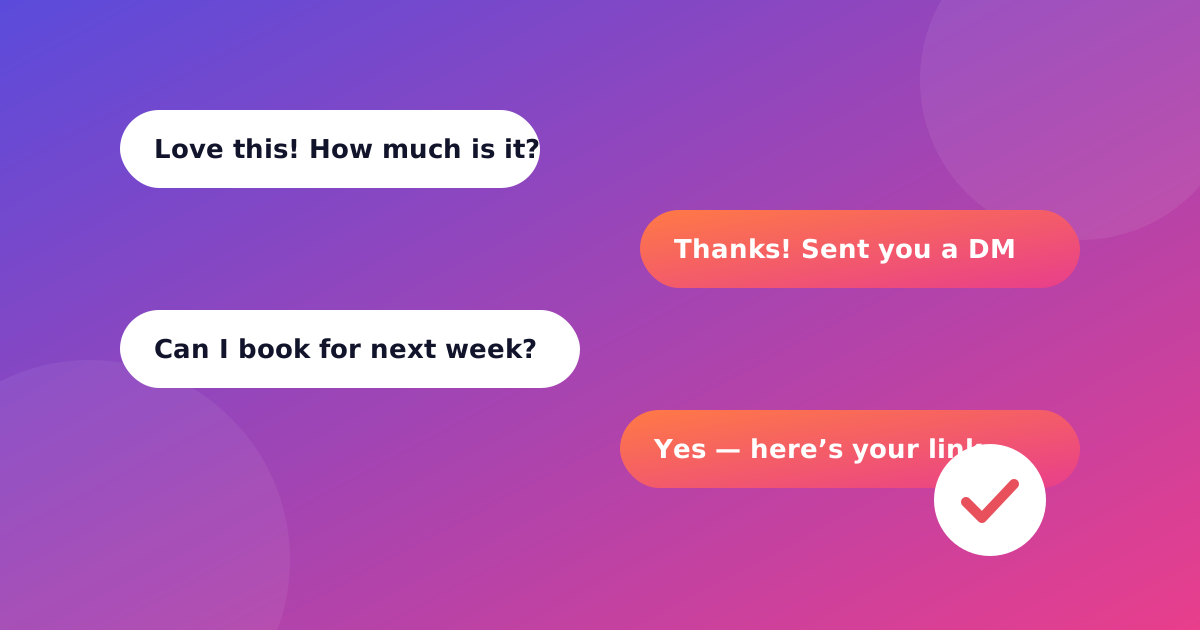
When someone shows buying interest — asks about price, availability, or comments your keyword — move to a private message. Say so publicly (“Just sent you a DM!”) so others see that you respond. Your opening DM should deliver what you promised first, then open a door:
Notice what's missing: no pitch, no price list, no wall of text. Just value and one easy question.
Step 4: Qualify with one or two questions
Your goal is to understand whether — and how — you can help. Good qualifying questions are easy to answer and reveal the gap between where they are and where they want to be:
- “What are you working on right now?”
- “What's been the biggest challenge so far?”
- “Have you tried anything for this already?”
Listen to the answers. Use their exact words when you respond — it shows you were paying attention and makes the conversation feel human.
Step 5: Offer the right next step
Not everyone is ready to buy, so match your offer to their stage:
- Just curious: a free resource, a helpful post, or an invitation to your email list.
- Interested but unsure: a short call, a case study, or a sample.
- Ready: a direct link to book or buy, with the price stated clearly.
Ask permission before pitching: “Based on what you've told me, I think our program could help — want me to send the details?” A “yes” to that question makes the next message welcome instead of intrusive.
Step 6: Follow up
Many sales happen on the follow-up. If someone goes quiet, send one friendly message 24–72 hours later — and add value rather than pressure:
One or two follow-ups are helpful. Five is spam. If they don't respond after a second follow-up, leave the door open and move on.
Systems that make this scalable
- Saved replies: keep templates for your most common questions in Instagram and Facebook's saved-reply features — then personalize the first line.
- Keyword automation: tools that integrate with Meta can send an automatic first DM when someone comments a keyword. Keep the automated message short and follow up personally.
- Labels and folders: tag conversations as “lead”, “follow up” or “customer” so nobody slips through.
- A simple tracker: a spreadsheet with name, date, stage and next step is enough to start.
Mistakes that kill DM sales
- Pitching in the first message.
- Copy-pasting obvious templates with no personalization.
- Sending voice notes or long paragraphs to someone you just met.
- Taking days to reply to a warm lead.
- Hiding the price when someone asks directly.
Social media gives you something advertising alone never could: real conversations with the people who already like what you do. Treat every comment like the start of a relationship, and the sales follow naturally.