“You need to be on every platform.” It's one of the most repeated pieces of social media advice — and one of the most expensive. For most small and growing brands, trying to be everywhere means being nowhere in particular. The fix is simple: pick a maximum of three platforms, give each one a clear job, and go deep.
Why “everywhere” fails
Every platform has its own language. What works as a TikTok rarely works unchanged as a LinkedIn post. Instagram rewards polish and consistency, YouTube rewards depth and searchability, Facebook groups reward conversation. When you spread a small team (or just yourself) across six channels, three things happen:
- Quality drops. You start posting the same lukewarm content everywhere, and none of it feels native.
- You never learn. Each account gets so few posts that you can't tell what's working and what isn't.
- Engagement dies. Social media is social. If you don't have time to reply to comments and DMs, the algorithms — and the people — move on.
Momentum on social comes from repetition: posting consistently, studying the results, and doubling down. That's only possible when your attention isn't scattered.
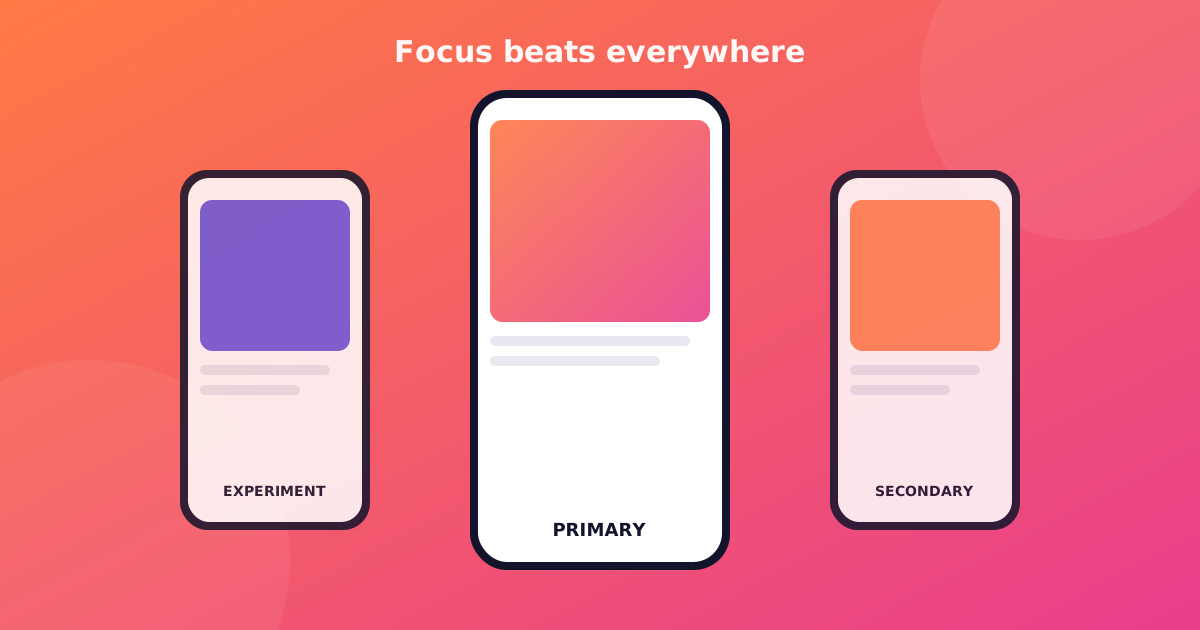
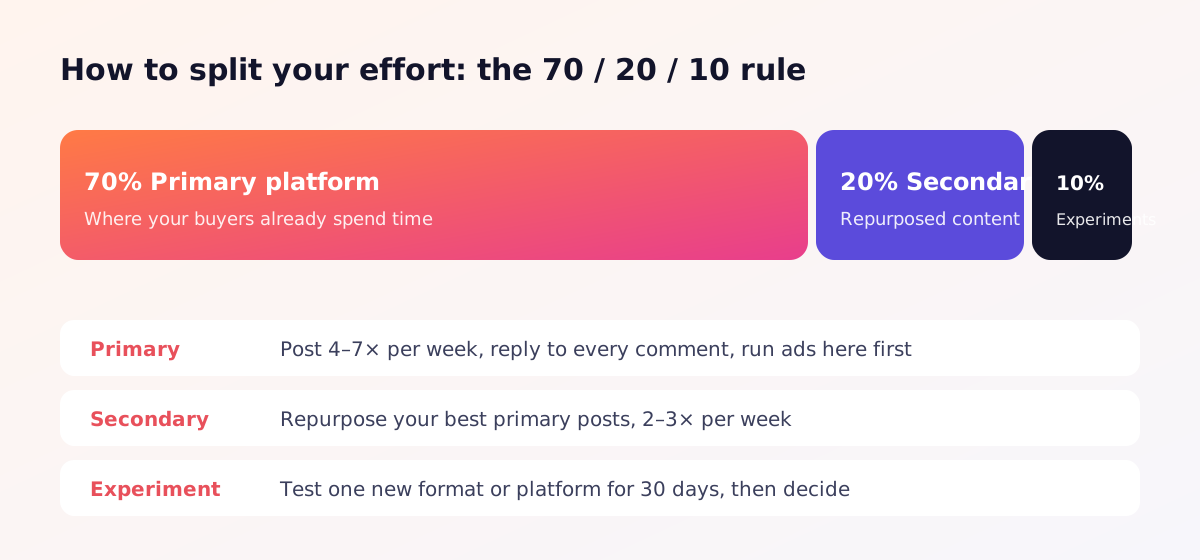
The rule: one primary, one secondary, one experiment
Here's the structure we use with every agency client and teach in the Social Growth Program:
- Primary platform. The place your best customers already spend time. This gets most of your energy: original content, daily engagement, and your first ad dollars.
- Secondary platform. A channel where you repurpose your best primary content with light edits. It extends your reach without doubling your workload.
- Experiment. One new platform or format you test for a fixed period — usually 30 days — before deciding whether it earns a permanent spot.
How to choose your primary platform
Don't pick the platform you personally enjoy most. Pick the one that best matches three things:
1. Where your buyers are
Think about who actually pays you. A B2B consultant selling to operations managers will usually find buyers on LinkedIn. A local bakery will find them on Instagram and Facebook. A brand selling to people in their twenties should take TikTok seriously. If you're unsure, ask your last ten customers which apps they open every day — it's the fastest market research you'll ever do.
2. What content you can sustain
Be honest about what you can create every week. If you hate being on camera, a video-first platform will be a grind (although we'd gently suggest that short, simple talking-head videos are easier than you think). If you love writing, LinkedIn and Threads reward text. If your product is visual, Instagram and Pinterest are natural fits.
3. How people buy what you sell
Impulse purchases under $50 can sell straight from a Reel or TikTok. A $5,000 service usually needs trust built over time — longer videos on YouTube, case studies on LinkedIn, or a nurturing email list behind your social content. Match the platform to the length of your sales cycle.
Making your secondary platform almost free
Your secondary platform should take a fraction of the effort of your primary. The trick is a repurposing system:
- Post on your primary platform first and wait about a week.
- Pick the two or three posts that performed best.
- Adapt them for the secondary platform: new caption, platform-native format (for example, a Reel becomes a YouTube Short with a clearer title, or a LinkedIn post becomes an Instagram carousel), and remove other platforms' watermarks.
Because you're only repurposing proven winners, your secondary account tends to perform well from the start — with a fraction of the work.
Running a proper experiment
Curiosity about a new platform is healthy; drifting into it without a plan is not. When you test a new channel, set the rules up front:
- Fixed time: 30 days.
- Fixed effort: for example, three posts per week.
- One success metric: followers gained, profile visits, or — best of all — leads.
At the end of the 30 days, make one of three decisions: promote it (swap it with your secondary), keep it as an experiment for another month, or drop it without guilt.
When to add more platforms
Add a platform only when your current ones are running smoothly without you thinking about them: you have a content calendar, a posting rhythm, and replies are handled within a day. Usually that's when you've hired help or built enough systems that the extra channel won't steal attention from the ones already paying off.
The bottom line
Being everywhere sounds ambitious, but focus is what actually compounds. Choose your three, give each a job, and commit for at least 90 days. You'll learn faster, create better content, and build a community that actually knows who you are.