You don't need thousands of dollars to start advertising on Facebook and Instagram. You do need a plan. Most small-budget campaigns fail not because the budget is small, but because it's spread across too many audiences, too many ad sets and too many objectives. Here's the simple structure we use to launch a first campaign without wasting money.
Before you spend a dollar
Get these four things in place first. Skipping them is the most common (and most expensive) beginner mistake.
- A Meta Business account and ad account set up in Meta Business Suite, with your Facebook Page and Instagram account connected.
- Tracking. Install the Meta Pixel on your website, and set up the Conversions API if your website platform supports it. Mark the actions that matter — purchases, lead form submissions, bookings — as conversion events.
- A clear offer. “Learn more about us” isn't an offer. A free consultation, a first-order discount, a free guide or a limited-time bundle is.
- A landing page that matches the ad. If the ad promises a free guide, the page should show the guide and a form — nothing else.
Pick one objective
Meta lets you optimize for many outcomes. For a first campaign, choose the one closest to money:
- Sales if you sell online and your pixel is tracking purchases.
- Leads if you sell services, high-ticket products or appointments. Meta's instant forms are a simple way to start; leads on your own site are usually higher quality.
Avoid optimizing for reach, likes or traffic when your goal is customers. Meta is very good at delivering exactly what you ask for — so ask for what you actually want.
The simple test structure
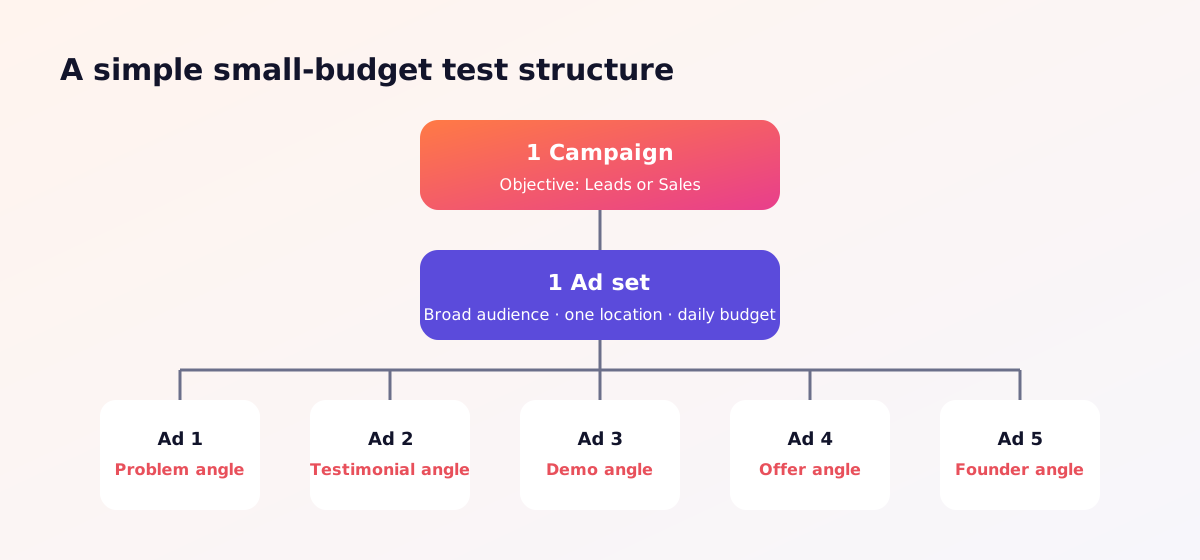
Keep everything in one campaign with one ad set. Consolidation gives Meta's system enough data to learn quickly, which matters even more when the budget is small.
The ad set
- Location: where your customers are (a radius around your business for local services).
- Audience: start broad. Set age and location, and resist stacking lots of detailed interests. Today's ad delivery systems usually find buyers better than manual targeting does — your creative does the targeting.
- Placements: leave Advantage+ placements on unless you have a strong reason not to.
- Budget: a daily budget you can comfortably maintain for at least two weeks.
The ads: test angles, not tiny tweaks
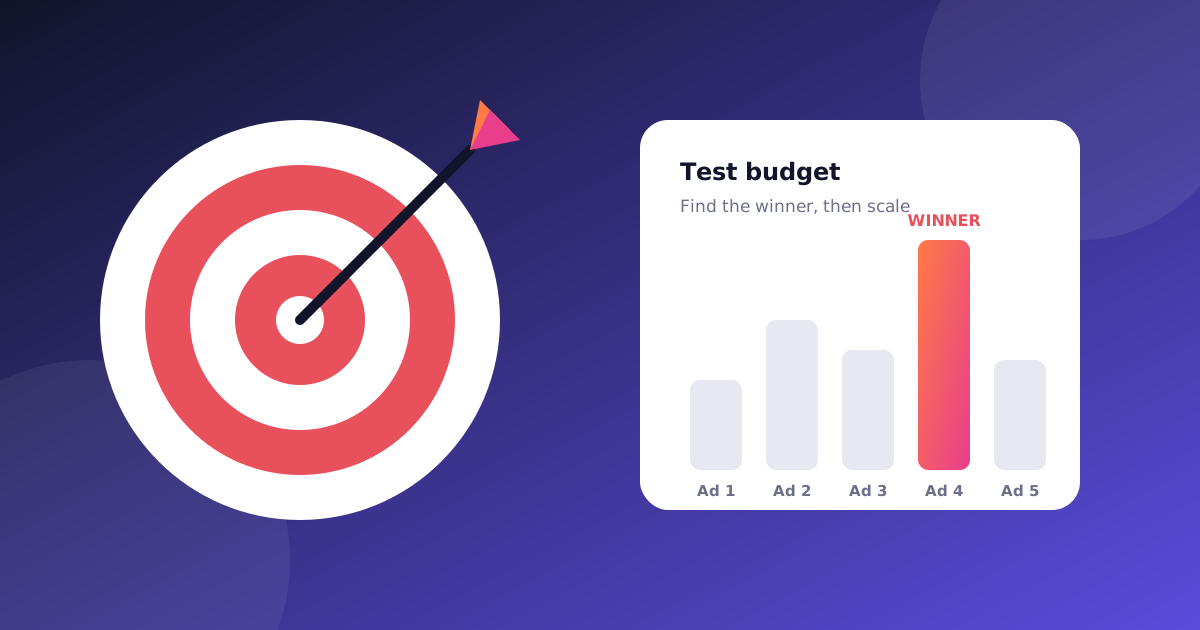
Create three to five ads that each take a genuinely different angle. Changing a button color teaches you nothing; changing the message teaches you what your market cares about. Good angles to test:
- Problem: name the pain your customer feels.
- Testimonial: a real customer describing their result (with their permission).
- Demo: show the product or service working.
- Offer: lead with the deal or the free resource.
- Founder: you, on camera, explaining why you do this.
Use vertical video (9:16) where you can — it fits Reels, Stories and the feed — and add captions because many people watch without sound.
The first 14 days: hands off
When a campaign launches, it enters a learning phase where Meta's system explores who responds. Editing budgets, audiences or ads during this period resets that learning. So:
- Days 1–3: check that ads are approved, delivering and that tracking fires correctly. Don't judge results yet.
- Days 4–7: look at early signals — click-through rate and cost per click show whether people find the ads interesting.
- Days 8–14: judge on cost per lead or cost per purchase. Turn off clear losers (ads that spent meaningfully with no results), keep the winners running.
Reading your results
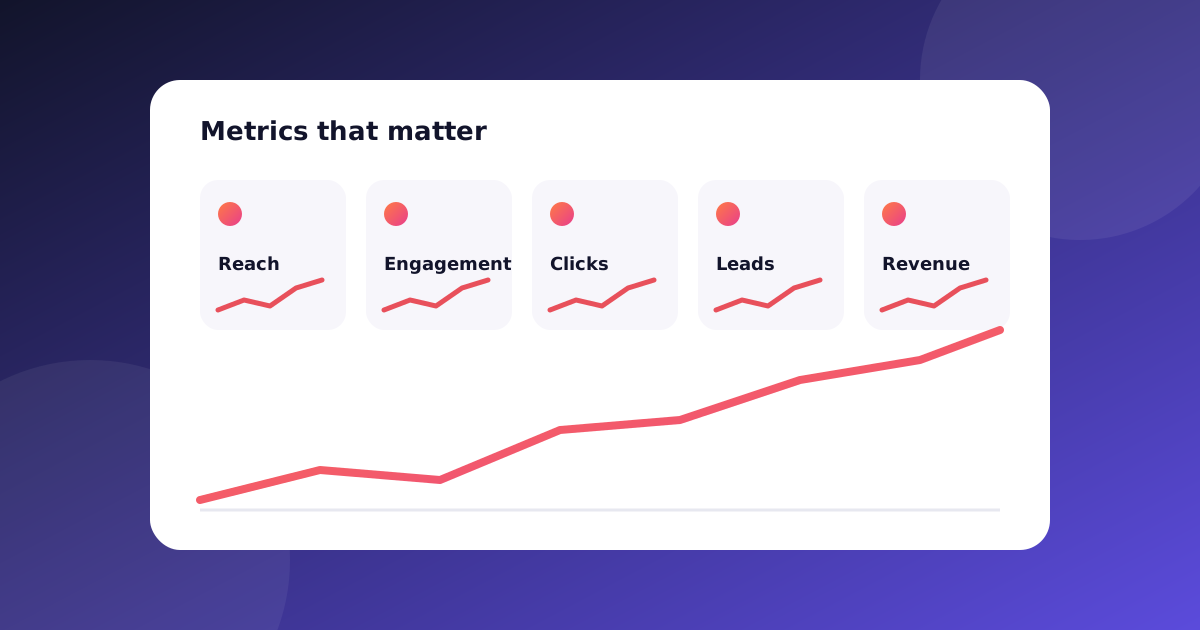
Focus on three numbers:
- Cost per result — what you paid per lead or sale. This is the number that matters most.
- Click-through rate (link) — the share of people who clicked. A low CTR usually means the creative or hook isn't landing.
- Landing page conversion rate — clicks that turned into leads or sales. If CTR is healthy but conversions are poor, fix the page, not the ad.
Scaling what works
Once you have an ad that brings in customers at a cost you're happy with:
- Increase the budget gradually — modest increases every few days rather than doubling overnight.
- Make new ads that riff on the winning angle: same message, different hook, different visual.
- Keep refreshing creatives. Even great ads fatigue over time as the same people see them repeatedly.
Common mistakes to avoid
- Boosting posts instead of building proper campaigns in Ads Manager.
- Splitting a small budget across many ad sets and audiences.
- Turning ads off after two days.
- Sending ad traffic to a homepage instead of a focused landing page.
- Judging success by likes instead of leads and sales.
Start simple, be patient for two weeks, and let the data tell you what to do next. That's how small budgets turn into profitable campaigns.